The black tie dress code, explained
Black tie explained: the dinner jacket, peak or shawl lapels, satin or grosgrain, braided trousers, the shirt, bow tie, shoes and the white dinner jacket.
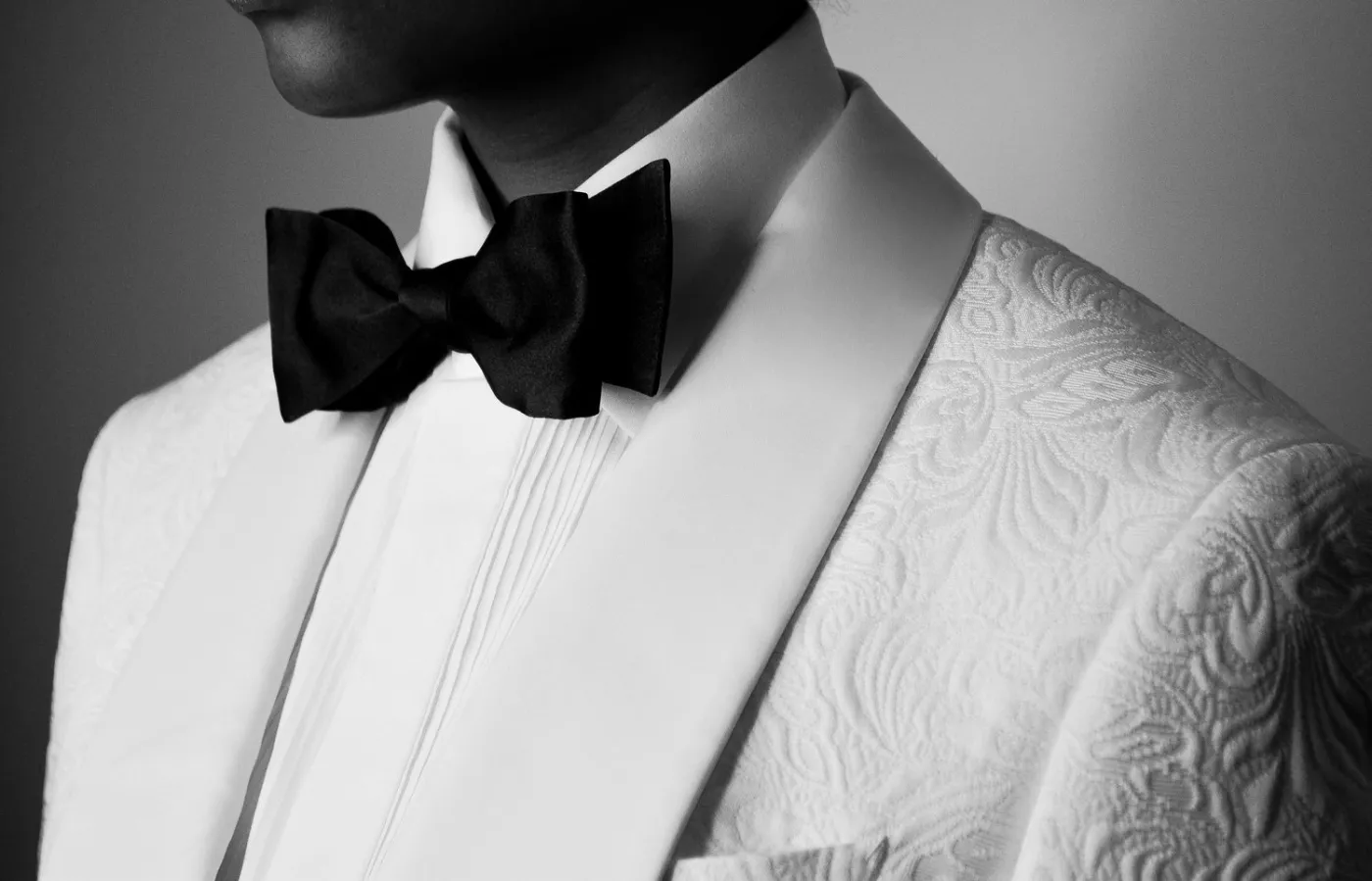
Black tie is the standard dress code for formal evening occasions. It means a dinner jacket, which Americans call a tuxedo, in black or midnight blue, with matching trousers trimmed in silk braid, a white dress shirt, a black self tie bow tie, a waistcoat or cummerbund, and black patent or highly polished shoes. Each piece has a reason, and once you know them the code is simple.
The dinner jacket
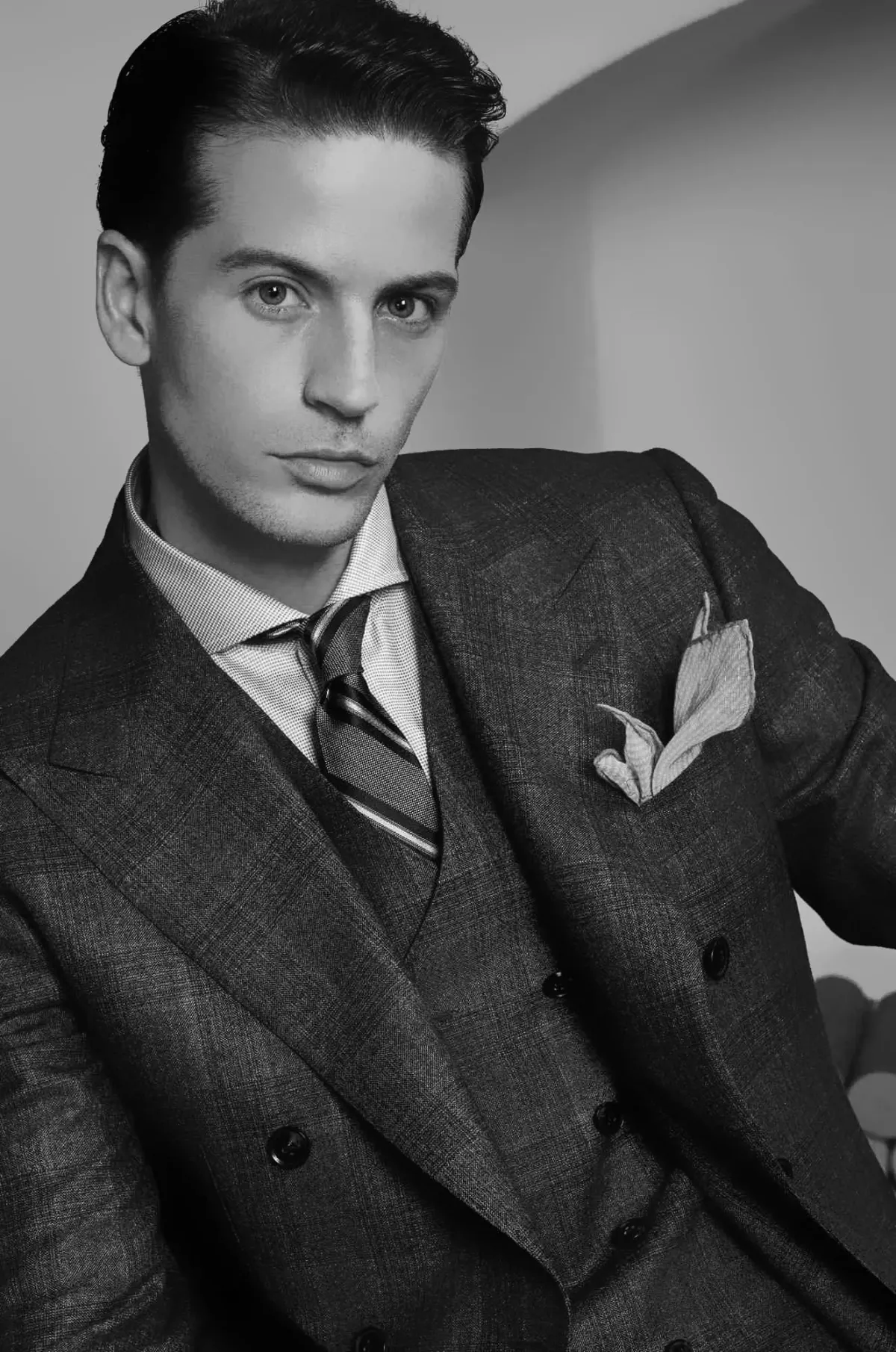
The dinner jacket is the centre of the outfit. It is traditionally black or midnight blue, a very dark blue that can look richer than black under evening light. It is usually single breasted with one button, though a double breasted dinner jacket is equally correct and, because it is worn buttoned, needs no waistcoat or cummerbund.
A few details set it apart from a dark suit:
- The pockets are jetted, without flaps, so the line stays clean.
- The buttons are covered in the same silk as the lapels, or are plain black.
- The cloth is usually a fine wool barathea or a smooth worsted, and a wool and mohair blend gives a subtle sheen.
Lapels: peak or shawl
There are two classic lapels. The peak lapel points up toward the shoulder and gives a strong, formal line. The shawl collar is one smooth curve with no notch, softer and a little more relaxed. Both are correct. A notch lapel, the kind found on most business suits, is often seen on cheaper dinner jackets but is the least traditional choice.
Satin or grosgrain facings
The lapels are faced in silk. Satin is smooth and catches the light. Grosgrain has a fine ribbed texture and a quieter, more matte finish, and is often thought the more understated of the two. Either is right. Ideally the bow tie and the trouser braid echo the facing.
The trousers
Dinner suit trousers are cut from the same cloth as the jacket and carry a single silk braid down the outside seam of each leg. They traditionally have no belt loops, are held up by braces or side adjusters, and finish without turn ups. The waistband should not show, which is where the waistcoat or cummerbund comes in.
The dress shirt
A white dress shirt with a turndown collar is the classic choice. The front is either pleated or a stiffer marcella bib with a woven texture, closed with studs or a concealed placket, and the double cuffs are fastened with cufflinks. A wing collar is traditionally kept for white tie; with black tie, a turndown collar is the safer and more classic choice.
Because so much of the shirt is on show, its fit matters: a collar that sits close without pinching, and cuffs that show just below the jacket sleeve. A shirt cut to your own measurements, such as our made to measure shirts, makes that easy.
The bow tie
Black silk, and ideally self tie. A self tie bow tie has a slight irregularity that a pretied one never has, and it can be worn untied at the end of the night. Match its texture to the lapel facings where you can: satin with satin, grosgrain with grosgrain. A long necktie is a modern variation, not black tie.
Waistcoat or cummerbund
Traditionally the waist is covered by one or the other, never both. A black tie waistcoat is cut low so the shirt front still shows. A cummerbund is a pleated silk sash, worn with the pleats facing up. With a double breasted dinner jacket, which stays buttoned, you need neither.
Shoes and finishing details
- Shoes: black patent leather or highly polished black calf, in a plain Oxford. Opera pumps are the most traditional option of all.
- Socks: black silk or fine wool, long enough that no skin shows when you sit.
- Pocket square: white linen or silk, folded simply.
- Studs and cufflinks: understated, such as black onyx, mother of pearl or plain metal.
The white dinner jacket
In warm weather, black tie can be worn with an ivory or white dinner jacket, paired with the usual black trousers with braid, a white dress shirt and a black bow tie. It belongs at summer evening events, especially outdoors, which makes it a good option for a hot Melbourne evening, a garden reception or a summer wedding where black tie is asked for. Ivory tends to be kinder than stark white. At a winter dinner in the city, it looks out of place.
Black tie optional and creative black tie
Black tie optional means the hosts will wear black tie and you are welcome to join them. If you do not, a dark suit in navy, midnight or charcoal with a white shirt and a dark silk tie is correct.
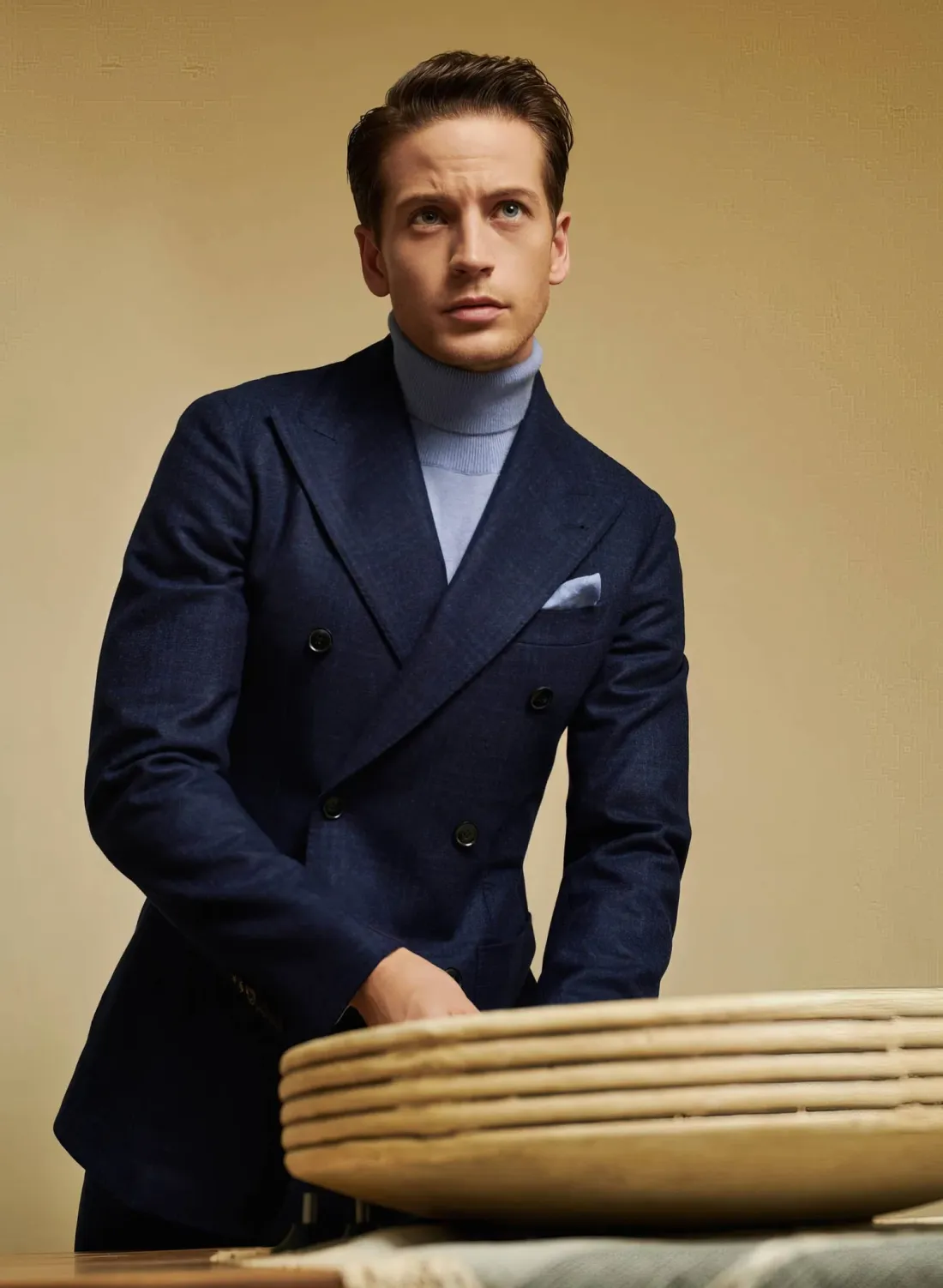
Creative black tie keeps the structure of black tie and invites personality within it. Think a velvet dinner jacket in a deep colour, a brocade jacket like the one pictured, a patterned bow tie, a fine knit roll neck in place of the shirt and tie, or velvet slippers. The dinner jacket stays; the details become yours.
Getting it right
The difference between a good dinner suit and a great one is fit: shoulders that sit cleanly, a jacket that closes without pulling, trousers that fall straight to the shoe. We make tuxedos and black tie to measure, in the cloth, lining, lapel and details you choose. You can see yourself in YB first in our virtual fitting room, and when the invitation arrives, book a fitting and tell us the date of the event.
See yourself in YB before you book.
Try On Your Suit