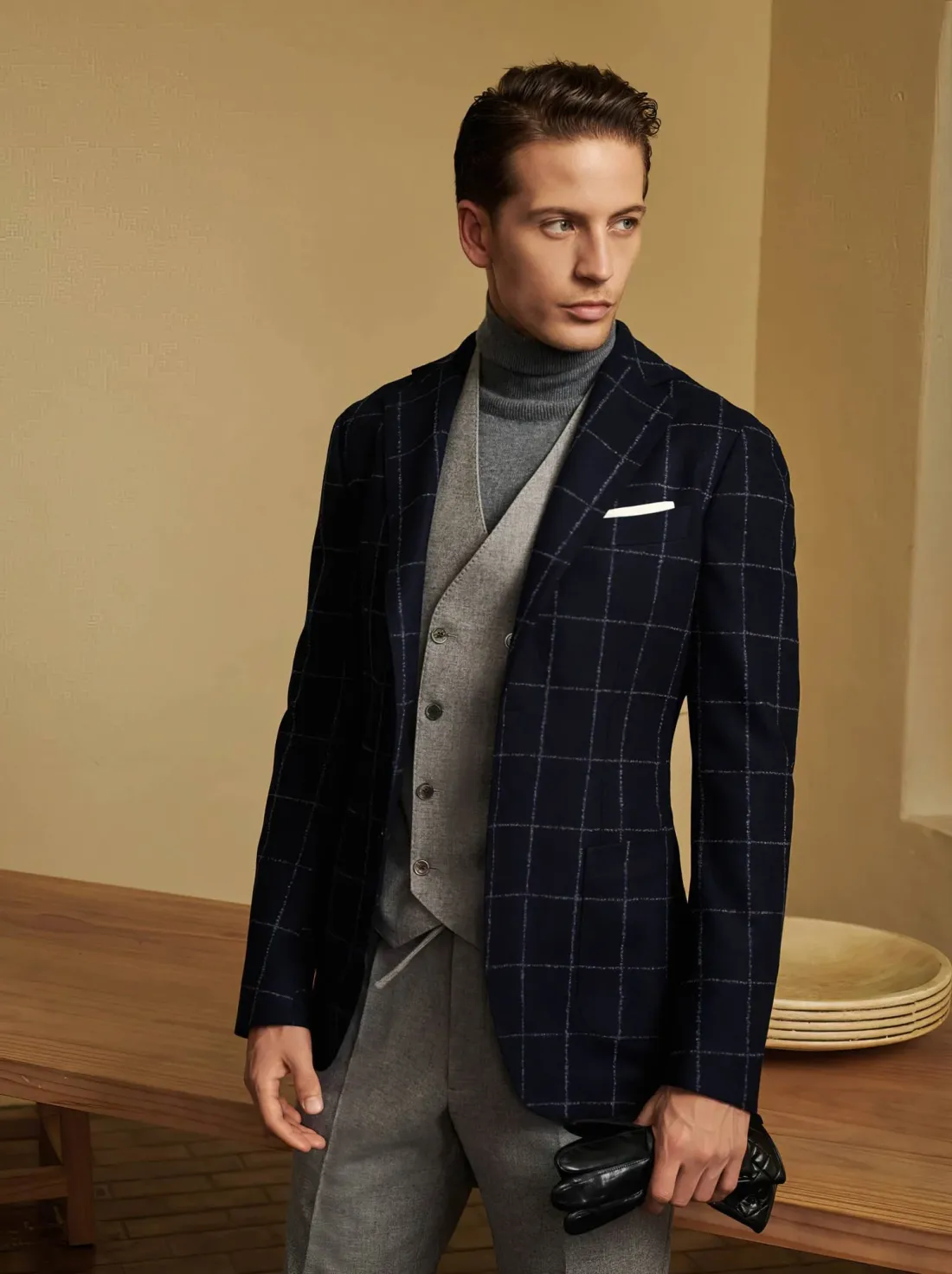
What should the groom wear?
What should the groom wear? Day or evening, venue and Melbourne season, the best colours, fit, timing, and how to coordinate the groomsmen around you.
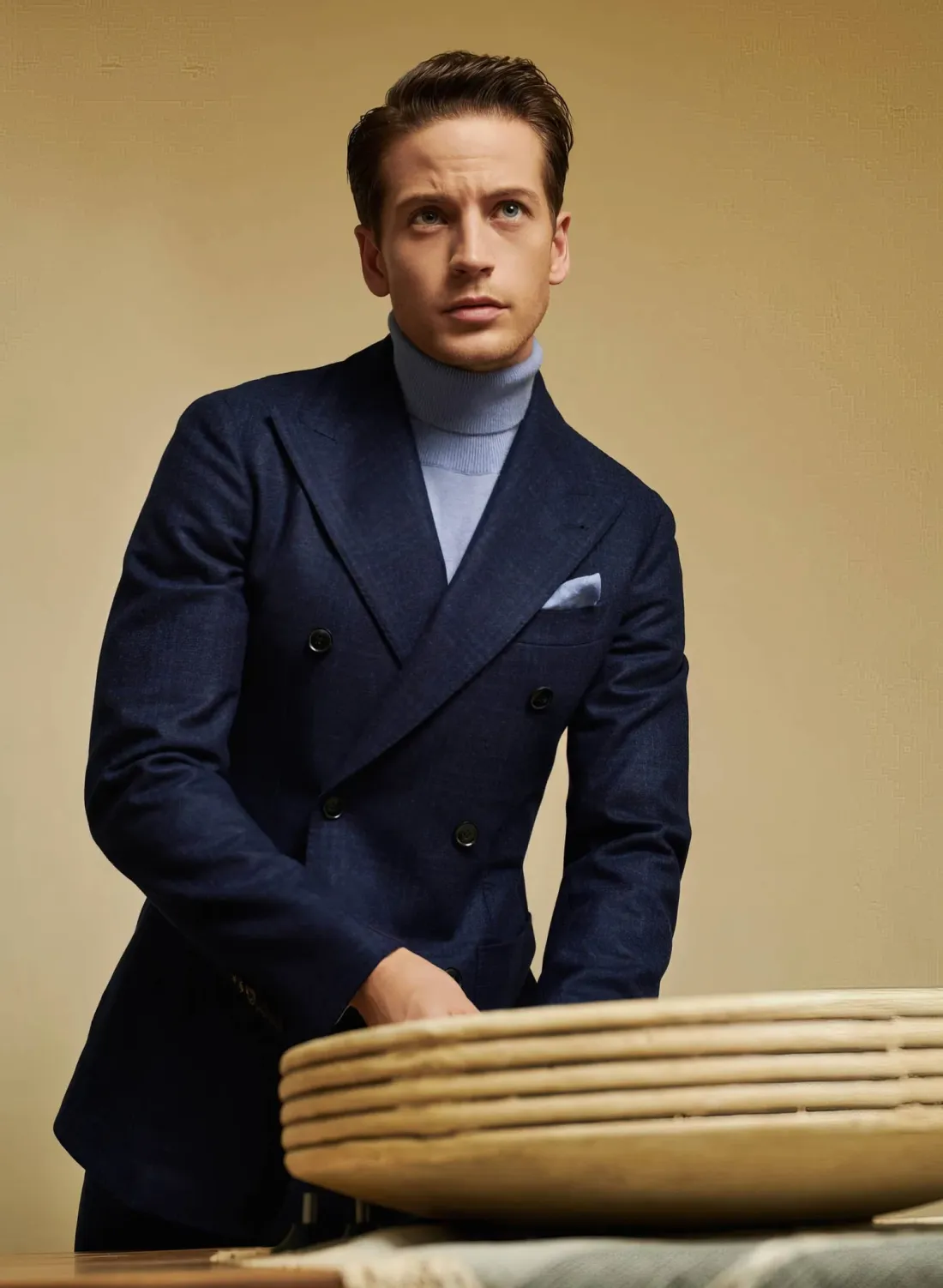
The groom should wear the best fitting suit at the wedding, in a colour and cloth that suit the time of day, the venue and the season. For a day wedding that usually means navy or grey; for an evening wedding, midnight blue or black tie. Start early, ideally a few months out, so there is time to choose the cloth, make the suit and fit it without pressure.
Start with the time of day
The clock is the oldest rule in menswear and still the most useful. Daytime ceremonies call for a lounge suit: lighter colours, more texture, a little more ease. Evening calls for darker cloth and, at the formal end, a dinner jacket.
- Day: navy, mid grey or a soft blue, with a white or pale blue shirt and a silk or knitted tie. Brown or burgundy shoes sit well with navy and grey.
- Evening: midnight blue or charcoal, a crisp white shirt and black shoes. If the invitation says black tie, a dinner jacket is the answer.
If the ceremony is in the late afternoon and the reception runs into the night, dress for the ceremony. A dark navy suit carries well from one to the other.
Read the venue and the Melbourne season
Melbourne weddings range from city ballrooms and hotels to garden ceremonies in the Yarra Valley, wineries and the beaches of the Mornington Peninsula. Each asks something slightly different of the groom.
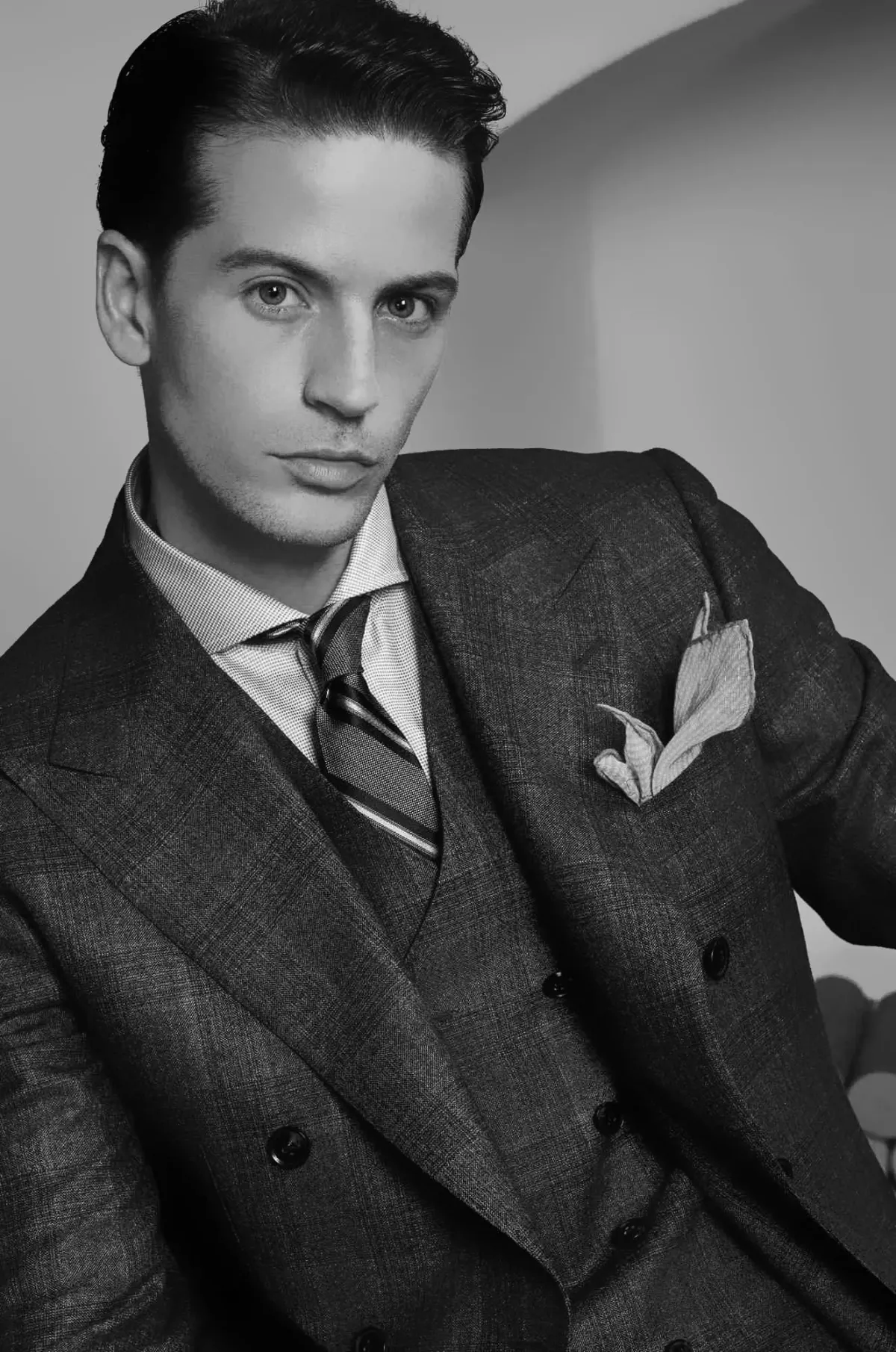
- City venues: sharper and darker. Navy, midnight or charcoal in a smooth worsted, with a three piece or double breasted cut if you like a little ceremony.
- Gardens and wineries: softer colours and more texture. Mid grey, a lighter navy or a quiet check, with brown calf or suede shoes that cope with grass.
- Beach and coast: light, breathable cloth in a paler tone, and a cut that will not mind the wind.
Summer
Hot, dry days are common from December to March. Choose a cloth around 240 to 280 grams, such as a lightweight wool, a wool and mohair blend or a linen blend, and ask for a lighter lining so the jacket breathes. Plan some shade for the photographs.
Winter
Cold, wet and dark by late afternoon. A heavier worsted or a flannel, a waistcoat for warmth, and a tailored overcoat for arrivals and photographs outside.
Spring and autumn
Four seasons in a day. A mid weight wool that works most of the year is the safest choice, and a waistcoat lets you dress up or down as the day turns.
Colours that work for a groom
- Navy: the most versatile choice. Flattering on almost everyone, right for day or evening, and easy to wear long after the wedding.
- Midnight blue: darker than navy, and under evening light it can look richer than black. Ideal for an evening reception or a dinner suit.
- Grey: light or mid grey for a garden or daytime wedding, charcoal for the city.
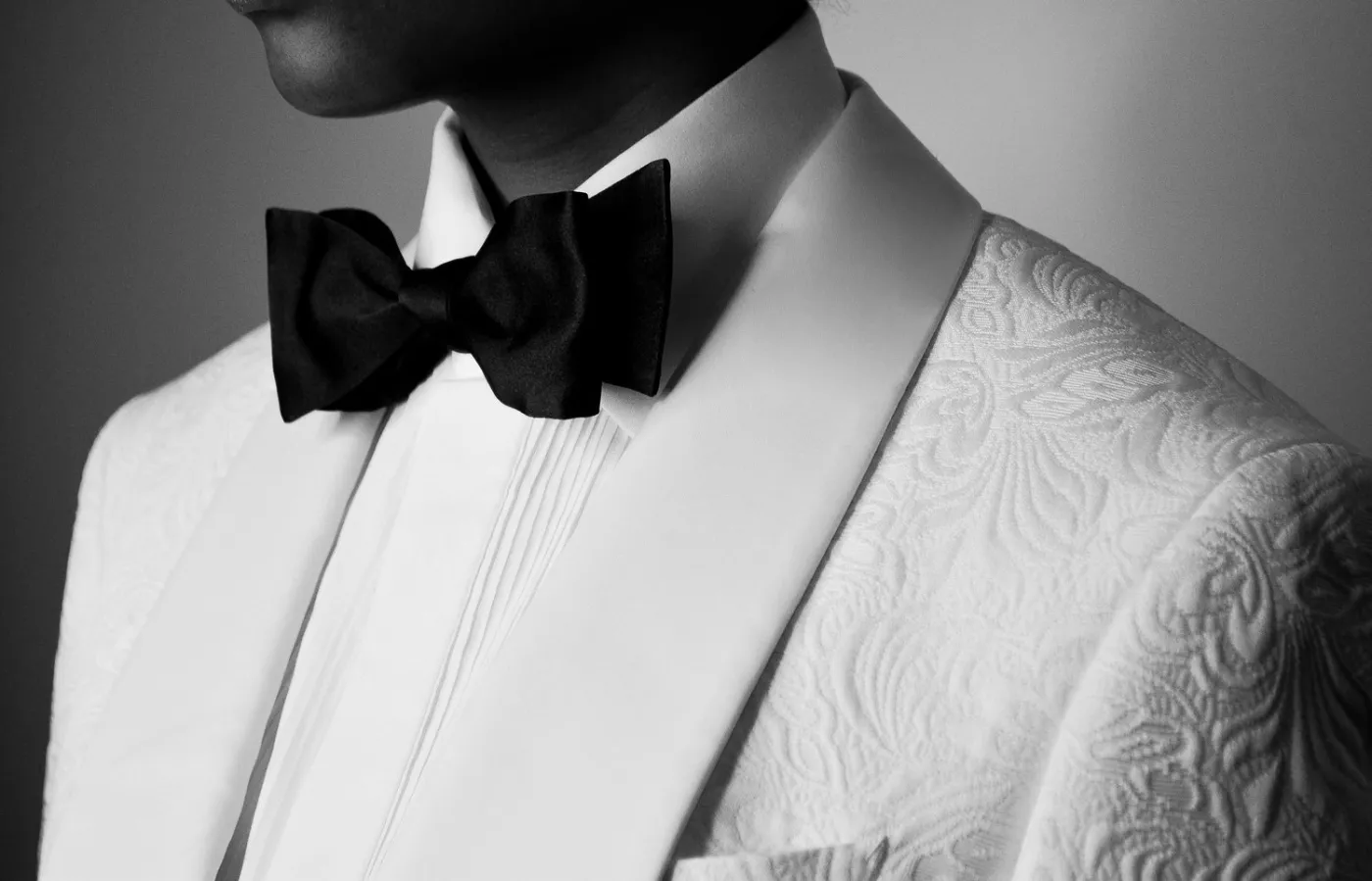
- Ivory dinner jacket: for a warm evening or a summer black tie wedding, an ivory dinner jacket with black trousers sets the groom apart beautifully. Keep it for the evening.
Whatever the colour, the groom should stand out through fit and detail, not noise. A good buttonhole flower, a textured tie or a pocket square in the wedding palette does more than a loud cloth.
Fit matters more than anything
You will be photographed from every angle: standing, sitting, walking and dancing. The jacket should sit cleanly on the shoulders with the collar resting on the shirt collar, close at the waist without pulling at the button, and show a little shirt cuff at the wrist. The trousers should be comfortable enough to sit through dinner and move on the dance floor.
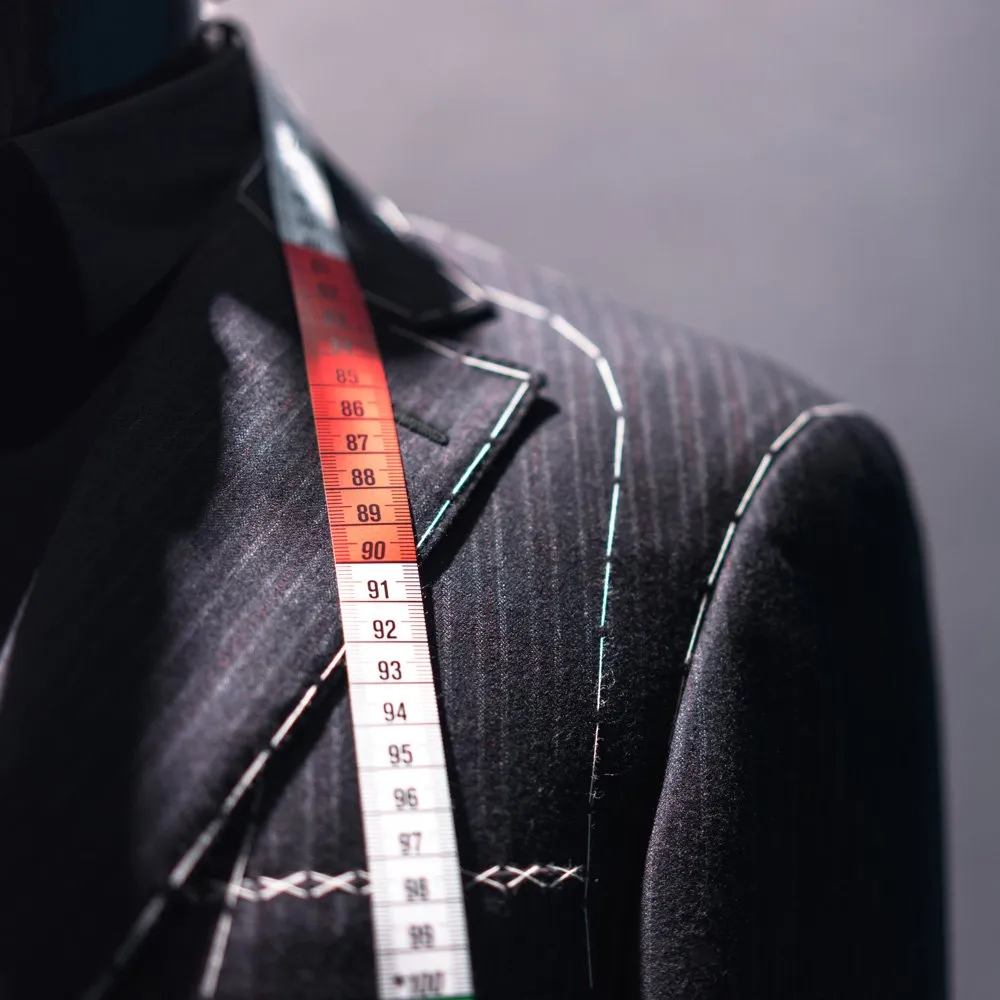
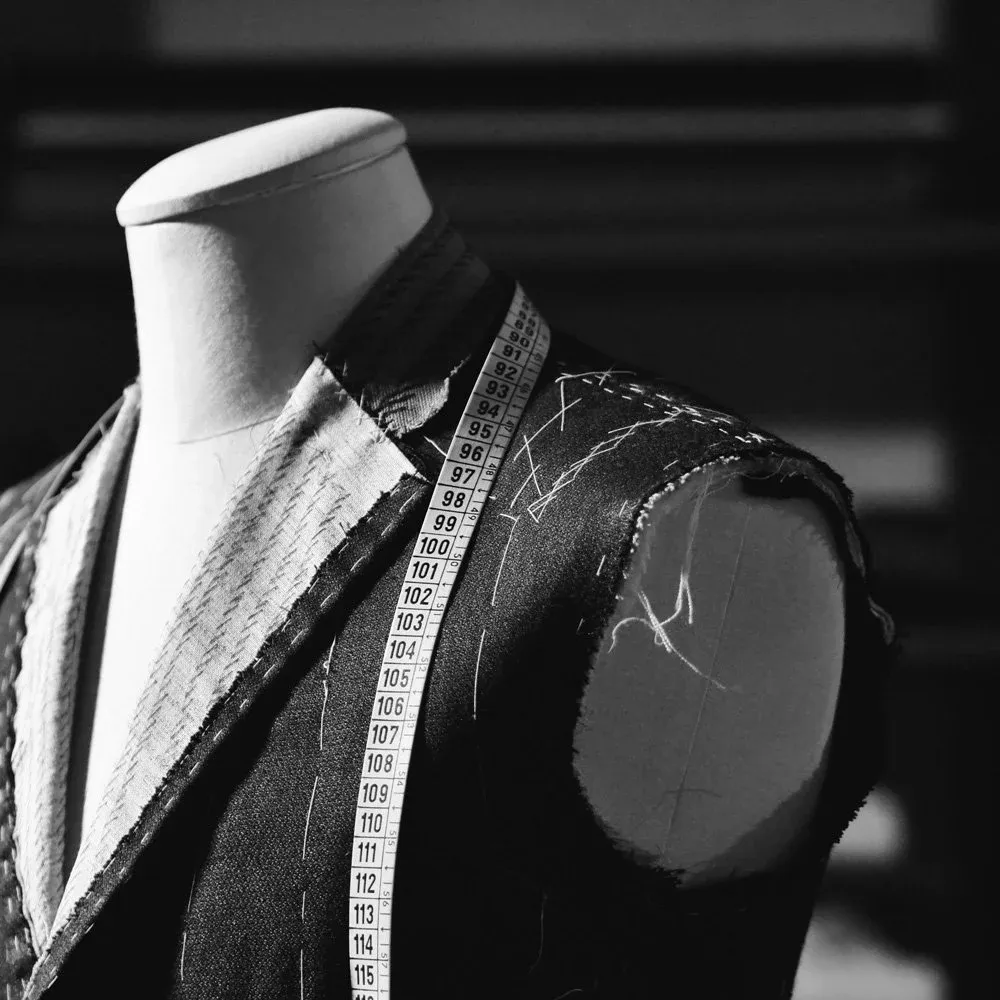
This is where a made to measure wedding suit earns its place. It is designed for your physique from over 25 measurements, in the cloth, lining, lapel and details you choose, and we keep your pattern on file afterwards.
Timing: order early
Our garments are ready in 3 to 8 weeks, depending on the make and the cloth, and are followed by a fitting where our own in house tailors make any adjustments. That is the making time, not the planning time. Leave room to choose the cloth without pressure, for the fitting, and for the weeks before a wedding getting busy. Mention the wedding date when you book so we can plan around it.
Coordinating the groomsmen
The groomsmen should look like a team, with the groom one clear step ahead. A few simple ways to do it:
- Dress the groomsmen in one colour family and give the groom a different shade, a waistcoat or a double breasted cut.
- Give the groom a different tie, lapel or buttonhole flower.
- Match shoes and belts across the party so the photographs read as one.
- Have everyone measured early, especially anyone travelling in, so every suit is ready at the same time.
If the evening is formal, our guide to tuxedos and black tie covers the details. To see yourself in YB before you decide, try our virtual fitting room. When you are ready, book a fitting and tell us the date.
See yourself in YB before you book.
Try On Your Suit