Choosing suit fabric for Melbourne weather
How to choose suit fabric for Melbourne weather: cloth weight in grams per metre, weaves from twill to flannel, wool, linen and mohair, and lining choices.
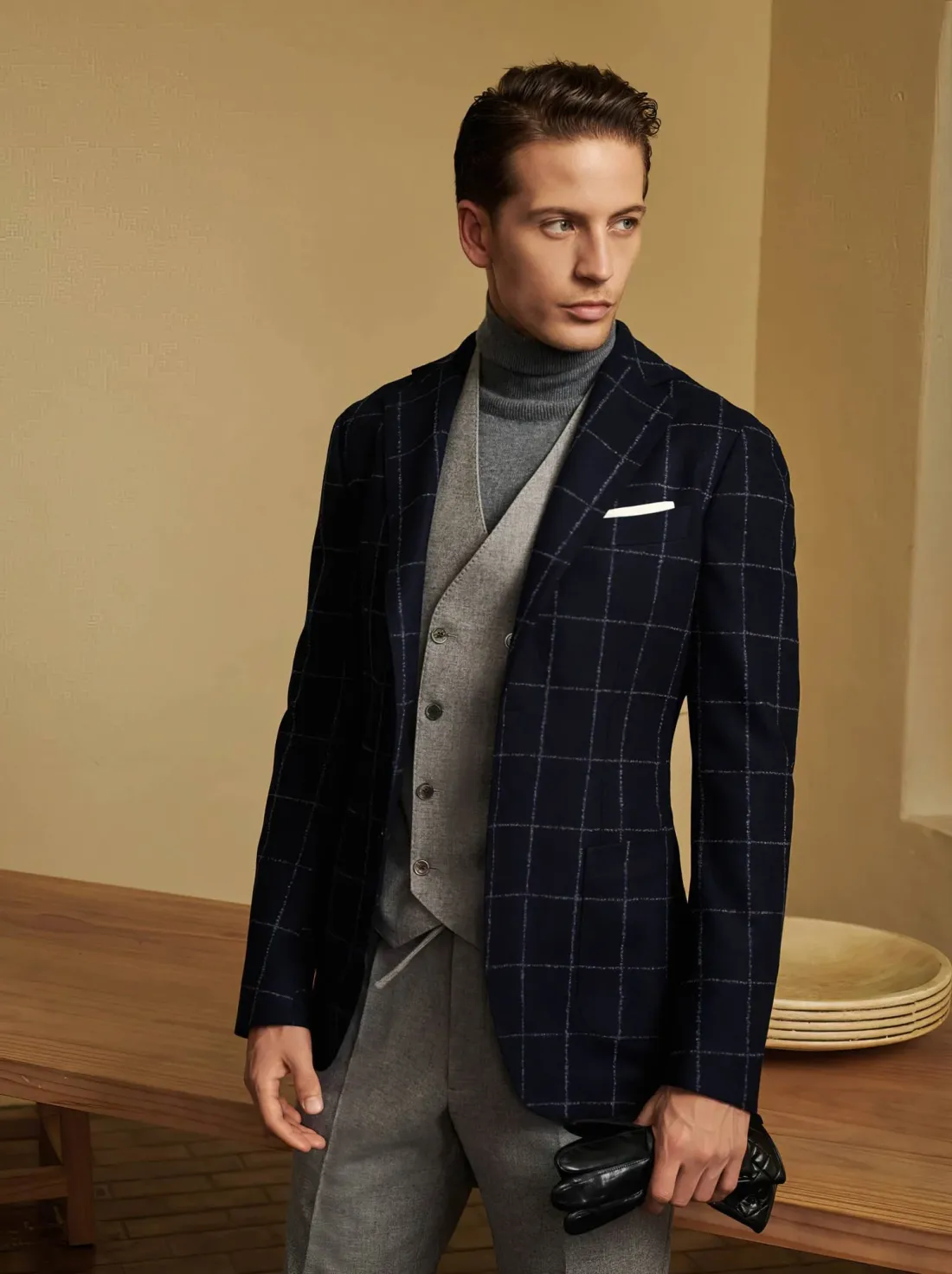
For Melbourne, the most useful suit cloth is a mid weight wool of about 260 to 300 grams per metre in a twill or an open weave. It breathes on a warm afternoon, holds its shape on a cold morning and copes with four seasons in a day. Add a flannel or tweed for winter and a lighter open weave for summer, and you are covered all year.
Start with weight
Cloth weight is measured in grams per metre. It is the quickest guide to how warm a suit will feel, although weave and fibre matter just as much.
- Under 260 grams: summer weights. Cool and light, but lighter cloth creases more easily and asks for a little more care.
- 260 to 300 grams: the year round range. This is where most Melbourne suits should sit.
- 300 to 380 grams: autumn and winter cloth, including most flannels.
- Over 380 grams: heavy tweeds and coating weights, made for cold, wet days.
A heavier cloth also drapes better and holds the trouser crease for longer, which is why a suit you plan to wear often is usually better at the upper end of the year round range than the lower.
Weave changes everything
Two cloths of the same weight can feel completely different because of how the yarn is woven.
Plain weave
A simple over and under weave. Crisp, smooth and slightly cooler than a twill of the same weight.
Twill
The fine diagonal rib you see on most worsted suiting. Twill is dense, smooth and durable, and it recovers well from creasing. A navy or grey twill is the backbone of most business wardrobes.
Hopsack
A basket weave with small open gaps between the yarns. It lets air through, resists creasing and has a gentle texture that suits an odd jacket as well as a suit.
Fresco style open weaves
Tightly twisted yarns woven in an open plain weave. The cloth feels dry and slightly crisp, breathes very well and springs back after a day in the car or on the train. On a hot day with a northerly blowing, an open weave is the cloth to reach for.
Flannel
Wool that has been brushed to raise a soft, slightly fuzzy surface. Flannel traps warmth, looks rich in grey and suits a Melbourne winter perfectly. It is less crisp than a worsted, which is part of its charm.
Tweed
A rugged, textured woollen cloth, usually heavy. Better for an odd jacket or a weekend suit than for a city office, and wonderful on a cold, wet day.
Fibres and blends
Wool is the right choice for almost every suit. It breathes, absorbs moisture without feeling damp, resists wrinkles and handles a wide range of temperatures. Finer wools feel softer but are less hard wearing, so a very fine cloth is better saved for occasional wear.
Wool and silk adds a subtle sheen and a cool, smooth handle. It works well for summer evenings and events.
Linen is the coolest cloth of all, and it creases freely. Accept the creases as part of the look and keep linen for relaxed summer days rather than the boardroom.
Mohair, usually blended with wool, gives a crisp, lustrous cloth that is cool to wear and very resistant to creasing. It is a fine choice for warm weather and for evening wear.
Cashmere blends are soft and warm with a beautiful drape. They are less durable than pure wool, so they suit a winter jacket or coat better than a suit worn every day.
Lining for the climate
A full lining helps a jacket slip on easily and adds a little warmth, which is welcome through the cooler months. For summer, a half lined jacket, lined across the shoulders and sleeves but open through the back, lets heat escape and makes the jacket lighter. Some summer jackets go further with very little lining at all. The lining fibre matters too: a breathable lining such as cupro or viscose feels far cooler than polyester.
What to choose for a first suit
If you are having one suit made, keep it simple:
- Choose navy or a mid to dark grey. Both work in an office, at a wedding and at dinner.
- Choose wool of 260 to 300 grams per metre in a twill or a fine open weave.
- Choose a solid colour or a very quiet pattern, so the suit can be worn often without being remembered as the same suit.
- Choose a full lining if you run cold or will wear it mostly in the cooler months, and half lined if you are often out in the heat.
That one cloth will see you through a spring racing day, a winter commute and most of summer. Once it is in your wardrobe, a flannel for winter and an open weave or linen for summer are the natural next steps.
Choosing cloth with us
We carry a wide selection of the finest European and Japanese fabrics, trimmings and design options, and you choose the cloth, lining and details for every garment. You can browse the range on our fabrics and cloth page, and read how each of our made to measure suits is designed for your physique from more than 25 measurements. Before you decide, try on a YB suit in our virtual fitting room and see yourself in YB first. When you are ready to feel the cloth in your hands, book a fitting and bring your questions about weight and weave.
See yourself in YB before you book.
Try On Your Suit